
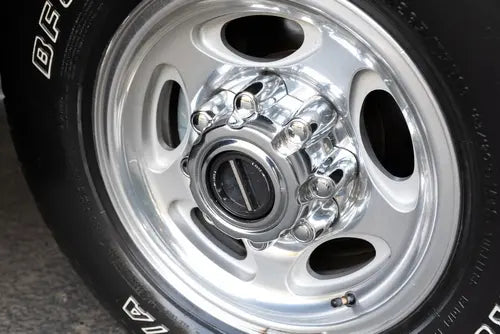
Locking hubs play a crucial role in how well your 4×4 system performs, especially in light-duty trucks designed for everyday use, occasional towing, and off-road versatility. Whether you’re comparing manual and automatic hubs for better reliability or considering a conversion because your factory system is wearing out, understanding how each type functions helps you make the right upgrade. Below is a clear breakdown of how both systems work — and why many truck owners eventually choose manual hubs for durability and long-term performance.
How Do Manual Locking Hubs Work?
Manual locking hubs are the most reliable option because they rely on a simple mechanical engagement that the driver controls directly. When you rotate the hub dial to “LOCK,” it physically connects the wheel hub to the front axle shaft, allowing the differential and transfer case to deliver torque to the wheels.
This direct mechanical engagement means there are no vacuum lines, electronic actuators, or torque-triggered cams that can fail. Manual hubs also allow you to disengage the front axle completely when you don’t need 4WD, reducing wear on axle components, improving fuel efficiency, and lowering drivetrain stress on daily-driven light-duty trucks.
Because they are so straightforward, manual hubs are especially dependable in harsh conditions like mud, snow, sand, and steep terrain. This is why many off-road enthusiasts and truck owners who tow prefer manual hubs over automatic ones—they simply last longer, perform more consistently, and provide better control.
How Do Automatic Locking Hubs Work?
Automatic locking hubs are designed for convenience. They engage on their own when the transfer case is shifted into 4WD, using torque-sensing mechanisms or vacuum-operated systems to lock the front axle. This allows drivers to activate 4WD from inside the cab without leaving the vehicle.
However, automatic hubs contain far more moving parts, which naturally increases the risk of failure. Worn cams, debris buildup, broken springs, and vacuum leaks are common issues that can prevent the hubs from locking or unlocking properly. This often results in intermittent 4WD engagement, clicking or grinding sounds, or complete failure when extra traction is needed most.
For light-duty trucks driven primarily on pavement, automatic hubs can be convenient. But for anyone who regularly relies on 4WD capability, the reduced durability and complex design make them less dependable than manual systems.
How to Change Auto Locking Hubs to Manual
Many truck owners choose to convert automatic hubs to manual hubs once the original system begins to fail. A manual hub conversion is one of the most effective ways to improve reliability, especially on aging 4×4 systems.
A typical conversion includes:
-
Taking off the factory automatic hub assembly
-
Installing the correct spindle nuts and washers if required
-
Setting proper wheel bearing end play
-
Installing the manual hub components in the correct order
-
Securing the dial mechanism and testing engagement
-
Capping automatic engagement vacuum lines, if desired
The process varies slightly depending on your truck’s year, make, and axle type, but the result is the same: a stronger, simpler, and far more dependable hub system that puts full control back in your hands.
Choosing the Right Hub System Wisely
Selecting between manual and automatic locking hubs ultimately depends on how much control, reliability, and long-term performance you expect from your light-duty truck. Manual hubs offer unmatched durability and consistent engagement, especially in off-road or heavy-use conditions. Automatic hubs provide convenience, but their complex internal parts make them more prone to failure as components age. For most drivers looking for dependable 4WD performance, switching to manual hubs remains one of the most effective upgrades you can make.
Wondering where to find quality locking hub parts for your truck? Torque King carries premium manual hubs, conversion kits, and front axle components built for long-term performance. Contact us to shop now and get the reliable parts your truck deserves.


Leave a comment
This site is protected by hCaptcha and the hCaptcha Privacy Policy and Terms of Service apply.